
Most people believe you cannot build serious wealth while staying rooted in faith. They assume that if you want to scale something big, you have to compromise somewhere along the way.
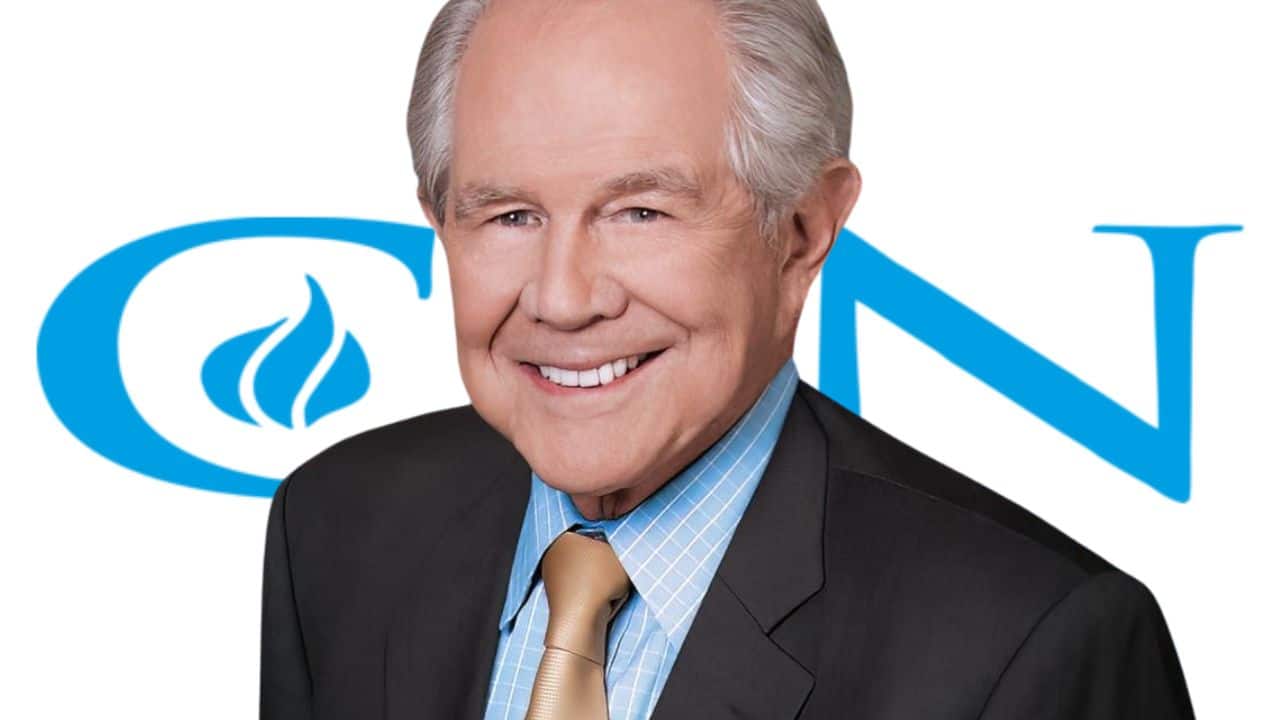
Pat Robertson’s life challenges that idea completely.
Before the global influence, before the media empire, before the hundreds of millions in revenue, he started with almost nothing. No capital, no infrastructure, and no guarantee that anything would work. What he built over time became one of the most influential Christian organisations in the world.
Pat Robertson, now late, was the founder of the Christian Broadcasting Network (CBN), an organisation that grew from a small local station into a global media network reaching over 100 countries. But his work extended far beyond broadcasting. He founded Regent University, Operation Blessing, and the American Center for Law and Justice, building institutions that impacted education, humanitarian aid, and legal advocacy.
This was not a small operation. This was scale.
And it started from a position most people would refuse to operate in.
“When we started, there was no money available for us. I bought a bag of soybeans — 70 pounds for two dollars — and we literally lived on soybeans. We just didn’t have any money to spend. Everything was devoted to getting the Christian Broadcasting Network underway. My first year, total income was $8,000 for the whole enterprise. Second year it was $20,000. And now our income is in the $600 to $700 million range. So it does grow. You bet.”
That is the part people skip over. Living on almost nothing, putting every available resource into building something that had no guarantee of success. Most people wait for better conditions. More money, more time, more certainty. Robertson moved without those things.
There is a principle here that most people ignore. Growth does not begin when you feel ready. It begins when you decide to move regardless of what is missing.
Another foundation of his thinking was giving, something that many struggle to understand when resources are limited.
“If you give to God, He gives back thirty, sixty and one hundredfold.”
This is not about random return. It is about alignment with a principle that runs throughout scripture. Giving is not loss when it is done with understanding. It positions you within a system of sowing and reaping. Most people hold tightly to what they have because they are afraid of losing it. Robertson operated from a different mindset. He understood that increase often follows obedience and trust.
He also had a clear view on tithing and financial responsibility.
“Tithing is giving the first 10 percent of your income to the poor, benevolent projects and in Biblical times, to the Temple of the Lord. In the Old Testament, people actually tithed three times, to give 25 to 30 percent of their income.”
Whether people agree with his interpretation or not, the underlying principle is clear. Money was never meant to control you. It was meant to be directed with purpose. That mindset alone separates those who build from those who stay stuck.
As his work expanded, leadership became a defining factor in his success.
“The most important virtue is humility, to have a servant’s heart, to listen to what people are saying, and to be empathetic to employees. I think that pride and arrogance are killers.”
Many people can build something small, but they fail when it comes to scale because they lack humility. Pride blinds judgment, weakens leadership, and eventually destroys what has been built. Robertson understood that leadership is not about ego. It is about responsibility.
He also understood the importance of building the right team.
“Hire the very best people possible and give them a strategic vision of where you want to go and give maximum freedom to employees to carry out the vision.”
This is where many people limit themselves. They try to do everything alone. They hold on too tightly and become the bottleneck in their own growth. Robertson focused on vision and allowed capable people to execute. That is how something grows beyond the individual.
That ties directly into another discipline he maintained throughout his life.
“A good leader delegates. I get up early, to pray, read and think. If I didn’t have that time to myself, I would lose my mind.”
There is structure in that routine. Before the noise of the day begins, there is alignment. Prayer, reading, and thinking. Most people operate in reaction mode, constantly responding to what is happening around them. Robertson created space to think clearly and lead intentionally.
When you look at the full picture, his life was not built on one breakthrough moment. It was built on consistent application of principles.
He started with almost nothing but still moved forward.
He gave even when it would have been easier to hold back.
He built with discipline instead of emotion.
He led with humility instead of pride.
He scaled by trusting others instead of controlling everything.
Beyond business and media, his life reflected a deeper priority. His greatest focus was not the organisations he built, but his faith. Everything he created was rooted in that foundation.
That is what most people miss. They focus on outcomes without understanding the structure behind them. They want growth without discipline, increase without patience, and results without responsibility.
Pat Robertson’s life shows that faith and success are not separate. When aligned properly, they reinforce each other.
Most people believe differently. That is why most people never build anything significant.
He did not just believe. He operated differently.