
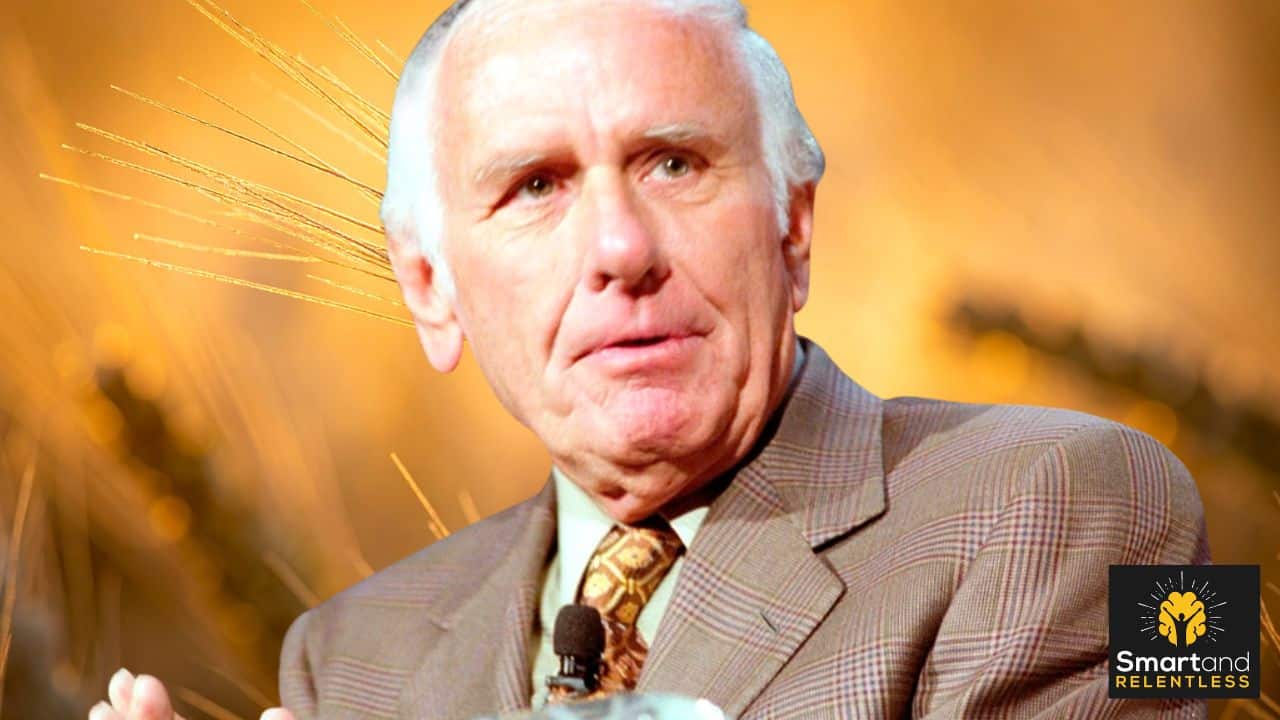
In this classic seminar recorded in 1981 in California, Jim Rohn explains one of the most important principles behind success, productivity, and long-term achievement: the law of sowing and reaping. While many people associate this idea with personal development, it is deeply rooted in Scripture and has been guiding disciplined, successful individuals for generations.
Jim Rohn, often regarded as the Godfather of the self-help industry and a mentor to Tony Robbins, had a rare ability to take biblical truths and translate them into practical, real-world results. What makes this teaching powerful is not just the idea itself, but how clearly he shows that success is not mysterious or accidental. It follows a pattern. It follows a law.
The law of sowing and reaping is clearly stated in Galatians 6:7: “A man reaps what he sows.” This principle applies to every area of life. It governs your finances, your habits, your relationships, and your future. Whether someone chooses to acknowledge it or not, the law is always at work.
Jim Rohn emphasizes that success is not something you chase. It is something you attract by becoming the kind of person who produces results. That transformation begins with what you do daily. Just as a farmer understands that harvest is a result of what has been planted, watered, and cultivated, the same is true for your life. If nothing is planted, nothing grows. If the wrong seeds are planted, the outcome reflects that.
One of the most important ideas in this teaching is that success is a process, not a single event. Many people want immediate results, but the reality is that meaningful progress happens gradually. It is built through repetition, discipline, and consistency over time. Ecclesiastes 11:6 reflects this clearly: “Sow your seed in the morning, and at evening let your hands not be idle.” The instruction is simple but demanding. Keep working. Keep planting. Stay active in your effort.
What makes this principle powerful is that it cannot be avoided. You cannot opt out of it. You cannot negotiate with it. The only control you have is over what you choose to sow. If someone consistently chooses distraction, procrastination, or laziness, the outcome will reflect that. On the other hand, if someone commits to discipline, growth, and focused effort, the results will eventually follow.
Jim Rohn breaks this down into something very practical. He explains that small actions, repeated daily, create outcomes that appear significant over time. The problem is that these actions often feel too small to matter in the moment. Reading a few pages, making one extra sales call, improving a skill slightly, or staying consistent with a routine may not seem like much on a given day. But over weeks and months, these actions compound.
This is where most people fail. They underestimate the power of consistency and overestimate the impact of occasional effort. They wait for motivation instead of committing to discipline. The law of sowing and reaping does not respond to intensity. It responds to consistency.
Another key part of this teaching is understanding the difference between being busy and being productive. Jim Rohn makes it clear that not all effort leads to results. It is possible to stay active all day and still move nowhere. Many people fill their time with low-value tasks and then wonder why they are not progressing. The law requires intentional planting. It requires you to be honest about whether your daily actions are aligned with where you want to go.
There is also a strong connection between this principle and faith. The Bible makes it clear in James 2:17 that faith without action is ineffective. Believing in success, praying for opportunity, or hoping for change is not enough on its own. Action is required. Effort is required. Discipline is required. Jim Rohn reinforces this idea by showing that results come from applied knowledge, not just awareness.
This is where the story of David becomes relevant. When David faced Goliath, he did not rely on size, strength, or experience. He relied on his confidence in God and his willingness to act. His boldness was not based on emotion. It was based on belief. That same mindset applies here. If you believe God has given you the ability to succeed, then your responsibility is to act on that belief consistently.
One of the most challenging aspects of sowing and reaping is the delay between effort and reward. You do not plant today and harvest tomorrow. There is a period where nothing visible seems to happen. This is where patience becomes critical. Galatians 6:9 reminds us not to grow tired in doing what is right, because the harvest comes in due time.
Many people quit during this phase. They stop because they do not see immediate results. They assume their effort is not working. In reality, the process is still unfolding beneath the surface. Just because something is not visible does not mean it is not growing.
Over time, the law of sowing and reaping does more than produce external results. It shapes internal character. The person who chooses discipline daily becomes disciplined. The person who chooses faith consistently becomes confident. The person who commits to excellence begins to operate at a higher standard without needing external pressure.
This is why the principle is so powerful. It does not just change outcomes. It changes identity.
If you apply what Jim Rohn teaches in this seminar, the focus becomes clear. You stop chasing quick wins and start building long-term results. You stop relying on motivation and start committing to consistent action. You begin to evaluate your daily habits more seriously because you understand that they are not random. They are seeds.
Everything you are doing right now is producing something. The only question is whether it is producing what you actually want.
The law of sowing and reaping is not complicated. It is direct. What you plant, you will eventually harvest. Once you understand that and begin aligning your actions with your goals, progress becomes inevitable.